In the world of global hiring, EOR (Employer of Record) services are no longer a niche solution. For startups testing international markets, or mid-sized companies expanding across borders, EOR has become the go-to shortcut for compliance and payroll. And among all the EOR providers, Deel is one of the most talked about.
If you’ve searched “Deel EOR pricing”, chances are you’re asking the same questions as many other HR leaders and founders:
👉 How much does Deel actually cost? Is it worth it? And how does it compare to competitors like Remote, Rippling, or Papaya Global?
Let’s break it down from pricing to hidden fees, and finally — what real users on G2 have to say.
👉 Editor’s view:
Startups value Deel’s speed and clean interface.
Larger enterprises often lean toward Rippling for its “HR + IT” ecosystem.
If coverage breadth is your 1 priority, Papaya Global might win out.
How Much Does Deel EOR Cost?
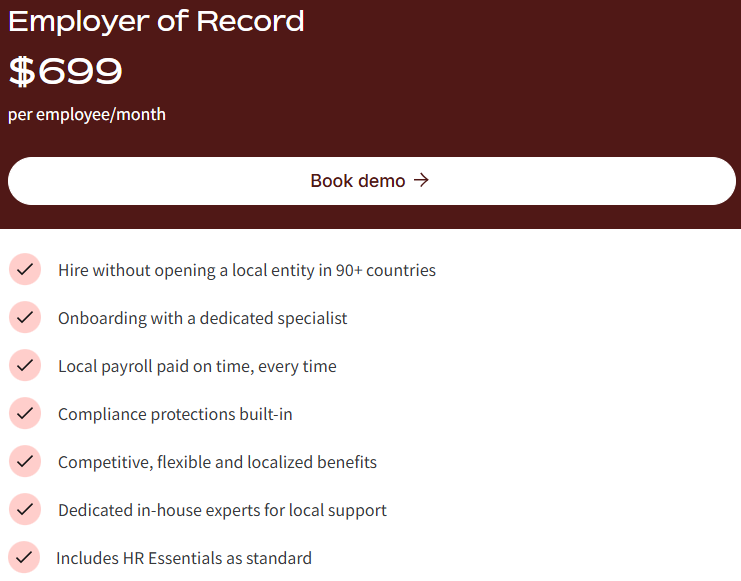
Deel doesn’t publish a single flat fee for EOR. Pricing typically depends on the country where your employee is based. From my experience and public data, the cost usually falls between $500–$650 per employee per month. Tier 1 countries (US, UK, Germany): often on the higher end (~$600+). Emerging markets (India, Philippines, Vietnam): closer to ~$500. But here’s the kicker: the monthly fee is only part of the story. You also need to ask about: Onboarding/termination fees (some clients only find out later). Withdrawal and currency conversion fees, which can eat into payroll costs. Local tax handling — sometimes absorbed, sometimes pushed back to the client. That’s why it’s risky to look only at the headline price.
Why Does EOR Look Expensive?
Many first-time buyers balk at the idea of paying $600 per employee per month. But let’s look at it in context: Setting up your own legal entity abroad: Registration, legal, accounting, HR compliance — you’re easily looking at six figures annually, plus months of waiting time. EOR alternative: Immediate hiring, legal compliance, built-in payroll. Yes, it’s costly per head, but the value lies in speed + risk mitigation. 💡 My take: EOR isn’t the cheapest option, but it’s the most flexible. If you just need to pilot a team in a new market, paying Deel’s fee is far more practical than building an overseas subsidiary from scratch.Deel vs Competitors: A Pricing Comparison
Deel is rarely evaluated in isolation. Most buyers also look at Remote, Rippling, and Papaya Global before making a decision. Here’s a quick comparison:| Provider | Pricing (per employee/month) | Coverage | Product Scope | Strengths | Weaknesses |
|---|---|---|---|---|---|
| Deel | $500–650 | 100+ countries | EOR + Payroll + Compliance docs | User-friendly UI, strong brand, multiple payment options | Hidden fees on FX/withdrawals, mixed support |
| Remote | $450–600 | 70+ countries | EOR + Benefits | Slightly cheaper, flexible benefits | Fewer countries, leaner product scope |
| Rippling | $550–700 | 50+ countries | HR + IT + EOR | All-in-one HR/IT stack, great for scaling | Complex to implement, heavy for small teams |
| Papaya | $500–650 | 160+ countries | Payroll-first EOR | Widest coverage, strong global payroll | Weaker UI/UX, steeper learning curve |
Hidden Costs: What to Watch For
From client conversations, the most common surprise with Deel pricing comes from hidden or indirect costs. The three main ones: 1. FX and withdrawal fees Employees may lose part of their salary due to conversion rates and transfer fees. This frustrates workers and inflates the total cost for employers. 2. Termination charges Ending contracts in some countries triggers extra costs. Always clarify upfront. 3. Local compliance gaps Deel handles most compliance, but in certain countries, employers still absorb local taxes or mandatory contributions. If you miss this in budgeting, the total bill feels much higher than expected.User Feedback: What G2 Reviews Say
So what do actual customers think? To cut through the marketing noise, I looked at G2, where Deel has thousands of reviews. Here’s the summary: Overall rating: ~4.8 out of 5 (very high). Ease of use score: ~9.3/10, among the best in the EOR category. Category recognition: Regularly ranked as a “Leader” in G2’s Best EOR Platforms reports.Common Pros (from G2 reviews)
Intuitive interface: “The dashboard is clean and onboarding contractors is seamless.” All-in-one compliance: Users love having contracts, invoices, and payroll in one system. Reliable payouts: Multiple payment options and generally on-time salary deposits. Great for contractors: Freelancers and remote workers especially praise how easy it is to get paid.Common Cons (from G2 reviews)
Currency conversion fees: Several reviewers say FX and withdrawal costs are higher than expected. Payout delays: In some countries, payments arrive slower than promised. Support responsiveness: Mixed feedback — sometimes fast, sometimes slow on complex compliance queries. Localization gaps: Some non-English regions lack fully detailed compliance guides. Occasional UX hiccups: A few users mention slow load times or clunky navigation in advanced settings. What This Means Deel wins high marks for ease of use and speed, but transparency on fees is a recurring sore spot. 💡 My perspective: For HR teams, this means you should always budget for the “hidden extras” and set expectations with employees about withdrawal methods to avoid dissatisfaction.Is Deel EOR Worth It?
Here’s how I’d frame it depending on company type: Startups: ✅ Worth it. You get speed to market and minimal compliance risk. Even if the per-head cost is high, it’s cheaper than entity setup. Mid-sized companies: ✅ Probably yes. If you’re expanding into multiple countries, Deel’s coverage and ease-of-use save management headaches. Large enterprises: 🤔 Maybe. If you need deep HR-IT integration or cost efficiency at scale, Rippling or a local EOR might be better. Bottom line: Deel isn’t the cheapest EOR. But for most companies, the value of “compliance + speed + ease of use” outweighs the extra fees. Just don’t ignore FX costs and support limitations.Need the right payroll tool?
Use the recommendation quiz to choose between Deel, Remote, Oyster, Rippling and Gusto based on hiring countries, worker type and accounting workflow.
Related tags: deel